



Copyright © 2002-2019 时尚焦点网 版权所有 网站地图
站点声明:本网内容为转载,为广告,相关素材由广告主提供,广告主对本广告内容的真实性负责。
本网发布目的在于传递更多信息,并不代表本网赞同其观点和对其真实性负责,转载内容仅供读者参考。
如有站点名称冲突,侵权等请联系我们删除,请您监督!
友情链接: 潮流网
在中国古代官窑彩瓷的艺术谱系中,这件大明成化年制斗彩奎纹碗是凝萃着明代成化制瓷工艺巅峰与斗彩瓷审美意趣的经典之作。它以白瓷为胎、青花为骨、五彩为韵,将成化斗彩“红胜火、翠如蓝”的釉色特征与“大明成化年制”的官窑身份融为一体,在莹润的瓷胎与斑斓的纹饰间,诉说着“瓷以承艺,彩以传情”的时代逻辑,既是成化斗彩瓷的代表性器物,更是中华彩瓷“工艺极致与审美巅峰共生”的生动注脚。
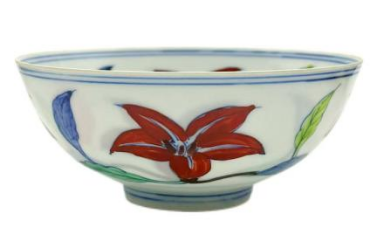
In the artistic genealogy of ancient official kiln colored porcelain, this Ming Chenghua-style doucai (five-color) pattern bowl, inscribed with "Made in the Chenghua Reign of the Great Ming", is a classic masterpiece that embodies the peak of Ming Chenghua official kiln porcelain-making and the aesthetic interest of doucai porcelain. With white porcelain as the body, underglaze blue as the framework, and overglaze colors as the decoration, it integrates the Chenghua doucai characteristic of "red as bright as fire, green as blue as gem" with the official kiln identity of "Made in the Chenghua Reign of the Great Ming". Between the smooth porcelain body and colorful patterns, it conveys the era's logic of "porcelain inherits art, colors convey emotions", serving as both a representative vessel of Chenghua doucai porcelain and a vivid footnote to the "coexistence of craft peak and aesthetic peak" in Chinese colored porcelain.
从形制与造型维度审视,这件斗彩碗尽显“形承明制,韵藏成化”的特质。碗身取撇口、深弧腹、圈足的经典碗形制,口沿舒展外撇,腹部饱满圆润,圈足规整小巧,既延续了明代官窑碗“器型端庄,线条流畅”的制式传统,又因成化朝制瓷工艺的精湛,在比例把控上更显玲珑雅致;碗心饰奎纹团花,外壁环绕缠枝奎花纹,纹饰布局疏密得当,与明代素面碗的简约风格形成鲜明对比。每一处轮廓的打磨、每一个弧度的塑造,都凝聚着对“成化斗彩碗形制美学”的精准表达,成为解析明代成化制瓷工艺的物质纽带。
From the perspective of shape and modeling, this doucai bowl fully demonstrates the characteristic of "inheriting Ming forms, hiding Chenghua charm in form". The bowl adopts the classic bowl shape of a flared mouth, deep curved belly, and ring foot, with the mouth edge stretching outward, the belly full and rounded, and the ring foot neat and small. It not only inherits the Ming Dynasty official kiln appreciation bowl tradition of "dignified shape and smooth lines" but also shows more delicacy and elegance in proportion control due to the exquisite craftsmanship of the Chenghua period; the center of the bowl is decorated with a kui-patterned round flower, and the outer wall is surrounded with interlocking kui flower patterns, with a well-proportioned layout of patterns, forming a sharp contrast with the simple style of Ming
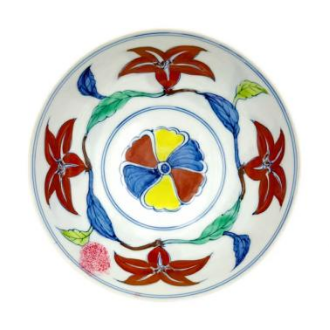
Dynasty plain bowls. Every polishing of the outline and shaping of the curve condenses the precise expression of "the formal aesthetics of Chenghua doucai bowls", becoming a material link for analyzing the porcelain-making craftsmanship of the Ming Chenghua period.
釉彩与工艺层面,这件斗彩碗承载着“白胎为骨,青花为线,五彩为魂”的创作追求。其胎体选用景德镇御窑厂的优质高岭土,经多次淘洗与烧制形成细腻坚致的白瓷胎,胎质薄轻莹润,为斗彩工艺的呈现提供了理想基底;釉面以纯净的白釉为底,釉色莹润如玉,光泽柔和,尽显成化瓷“白釉如脂”的特征。工艺上采用经典的斗彩工艺,先以青花在瓷胎上勾勒纹饰轮廓,形成细腻的青花线条,再以红、黄、绿、蓝等五彩填绘,经低温二次烧制而成;红色呈艳红明亮的矾红,绿色层次丰富、鲜妍欲滴,黄色温润透亮,蓝色浓艳沉稳,各色釉料与青花线条交织,形成“青花为骨,五彩为肉”的华丽效果,尽显成化斗彩“色彩明快,层次分明”的工艺巅峰。尤为精妙的是,匠人以青花双圈界定碗心团花,外壁纹饰环绕延伸,与成化斗彩“构图饱满,疏密有致”的审美理念不谋而合。碗底的“大明成化年制”六字青花款识,字体规整秀丽、布局严谨,是明代成化官窑款识的典型范例。每一处青花的勾勒、每一道五彩的填绘,都在无声诉说着成化御窑匠人对工艺极致的追求,使瓷碗既具实用的陈设功能,更显明代官窑的工艺巅峰。
In terms of glazes and craftsmanship, this doucai bowl embodies the creative pursuit of "white body as bone, underglaze blue as line, wucai as soul". Its body is made of high-quality kaolin from Jingdezhen official kiln, refined through multiple washings and firings into a fine and firm white porcelain body, with thin, light and smooth texture, providing an ideal base for the presentation of doucai craftsmanship; the glaze surface is coated with pure white glaze, with a smooth and jade-like glaze color and soft luster, fully showing the characteristic of Chenghua porcelain of "white glaze as cream". The classic doucai craftsmanship is adopted: first, underglaze blue is used to outline the outline of the patterns on the porcelain body to form delicate blue lines, then wucai (red, yellow, green, blue, etc.) is used for filling, and fired at a low temperature for the second time; the red is bright and bright alum red, the green has rich layers and fresh luster, the yellow is warm and translucent, and the blue is rich and steady, with various glazes interweaving with blue lines, creating a gorgeous effect of "underglaze blue as bone and wucai as flesh", fully showing the peak of Chenghua doucai craftsmanship of "bright colors and distinct layers". What is particularly exquisite is that the craftsman used double blue lines to define the round flower in the center of the bowl, with the outer wall patterns extending around, which coincides with the Chenghua doucai aesthetic concept of "full composition and balanced density". The six-character blue and white mark "Made in the Chenghua Reign of the Great Ming" at the bottom has a neat and beautiful font with a rigorous layout, serving as a typical example of Ming Chenghua official kiln marks. Every blue line outline and every wucai filling painting silently tell the Chenghua imperial kiln craftsmen's ultimate pursuit of craftsmanship, making the porcelain bowl not only have practical display function but also show the craftsmanship peak of Ming official kilns.
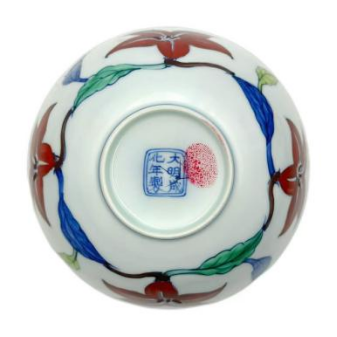
文化价值与时代意义维度看,这件大明成化年制斗彩奎纹碗是明代成化官窑瓷发展的“微观镜像”。成化朝是中国古代制瓷业的黄金时期,官窑以“薄如纸、润如玉、精绝伦”的工艺特征成为明清官窑的典范,斗彩瓷更是在此时期达到巅峰,以其色彩淡雅、工艺精湛而被誉为“明代彩瓷之冠”。这件斗彩碗便是这一文化潮流的典型样本——它既保留了明代官窑碗“形制规整”的工艺基因,又以斗彩工艺的极致呈现展现了成化朝“尚雅崇美”的宫廷审美,是“明代官窑瓷工艺巅峰化”的直观体现。在当代收藏语境下,它不仅是一件明代官窑瓷,更是解析明代制瓷史、宫廷审美史的关键标本:其价值不仅在于工艺的精湛与形制的经典,更在于它所承载的“明代成化官窑文化记忆”,每一寸瓷胎的肌理、每一处五彩的填绘,都在诉说着明代官窑从初创到鼎盛的风格演变,成为连接明代瓷文化与中国彩瓷巅峰的精神纽带。此外,成化斗彩瓷存世量极为稀少,全球已知不足百件,尤其是品相完好、纹饰清晰的奎纹碗,更成为瓷器收藏领域的顶级瑰宝,其历史与艺术价值均不可估量。
From the perspective of cultural value and epochal significance, this Ming Chenghua-style doucai kui-pattern bowl is a "micro mirror" of the development of Ming Chenghua official kiln porcelain. The Chenghua period was a golden period for the ancient Chinese porcelain industry. The official kiln became a model of the Qing official kiln with the craft characteristics of "as thin as paper, as smooth as jade, and extremely exquisite". Doucai porcelain reached its peak in this period, known as the "crown of Ming colored porcelain" for its elegant colors and exquisite craftsmanship. This doucai bowl is a typical sample of this cultural trend—it not only retains the craft gene of "neat form" of Ming Dynasty appreciation vases but also shows the court aesthetic of "advocating elegance and beauty" of the Chenghua period through the extreme presentation of doucai craftsmanship, serving as an intuitive embodiment of "the craftsmanship peak of Ming official kiln porcelain". In the contemporary collection context, it is not only a Ming Dynasty official kiln porcelain but also a key specimen for analyzing the history of Ming porcelain-making and court aesthetics: its value lies not only in its exquisite craftsmanship and classic shape but also in the "Ming Chenghua official kiln cultural memory" it carries. Every inch of porcelain body texture and every wucai filling painting tells the stylistic evolution of Ming official kilns from initial development to prosperity, becoming a spiritual link connecting Ming porcelain culture with the peak of Chinese colored porcelain. In addition, the surviving quantity of Chenghua doucai porcelain is extremely scarce, with less than 100 known pieces worldwide, especially kui-pattern bowls with excellent preservation and clear patterns, which have become top treasures in the field of porcelain collection, with immeasurable historical and artistic value.
当我们凝视这件大明成化年制斗彩奎纹碗,莹润的白瓷胎与浓艳的斗彩纹饰在眼前交融,成化朝的制瓷匠心与宫廷审美在方寸间碰撞,仿佛能触摸到明代宫廷的清雅陈设场景,也能感受到中华彩瓷“斗彩为韵,青花为魂”的深厚底蕴。它不仅是一件官窑赏碗,更是明代成化制瓷工艺的艺术结晶、盛世文化的物质凝结,在时光的摩挲中静静散发着瓷韵的古韵,以其独特的形制与文化内涵,让每一位收藏者都能读懂这份藏在瓷碗里的成化记忆,感受那份融于釉彩的历史传承与审美创新。
When we gaze at this Ming Chenghua-style doucai kui-pattern bowl, the smooth white porcelain body and gorgeous doucai patterns blend before our eyes, and the porcelain-making ingenuity and court aesthetic of the Chenghua period collide in a small space. It is as if we can touch the elegant display scene of the Ming court and feel the profound heritage of Chinese colored porcelain of "doucai as charm, underglaze blue as soul". It is not only an official kiln appreciation bowl but also an artistic crystallization of Ming Chenghua porcelain-making craftsmanship and a material condensation of prosperous culture, quietly exuding the ancient charm of porcelain in the touch of time. With its unique shape and cultural connotation, it allows every collector to understand the Chenghua memory hidden in the porcelain bowl and feel the historical inheritance and aesthetic innovation integrated into the glaze.

每天几千块广告费砸进去,直播间进人不少,成交寥寥无几,剩下的人去哪了? 短视频投流爆...
理财如同打理一个花园,既需要耐旱的植物抵御干旱,也需要常青的植物提供持久的生机。国...
Yuan Shikai Silver Dollar (Signed Version), Third Year of the Republic of China | A Century of Silver Charm, A Treasured ...
第八届2026「庭前春早」贾广健师生中国画作品展在贾广健艺术院开幕 3 月 20 日下午,时值农历...
Premium Recommendation - Chenghua Nian made yellow glazed chicken jar cup *本次藏品:成化年制黄釉鸡缸杯* 典藏...